Hems

Custom Search

Tuesday, 17 May 2011

Earth viewed from space

                                      EARTH FROM SPACE


Viewed from space, the most striking feature of our planet is the water. In both liquid and frozen form, it covers 75% of the Earth’s surface. It fills the sky with clouds. Water is practically everywhere on Earth, from inside the planet's rocky crust to inside the cells of the human body.

This detailed, photo-like view of Earth is based  largely  on observations from MODIS,                            Earth from space               
the Moderate Resolution Imaging
Spectroradiometer, on NASA's Terra satellite.
It is one of many images of our watery world
featured in a new story examining water in
all of its forms and functions.
 

Wednesday, 4 May 2011

Diffraction of light

              Diffraction of Light

When the light rays meet some obstacle in their path they will bend and travel. This process is called Diffraction of Light. Diffraction refers to various phenomena which occur when a wave encounters an obstacle. Italian scientist Francesco Maria Grimaldi coined the word "diffraction" and was the first to record accurate observations of the phenomenon in 1665.

Wonders of Diffraction of light
1.        Solar glory at the steam from hot springs. A glory is an optical phenomenon produced by light backscattered (a combination of diffraction, reflection and refraction) towards its source by a cloud of uniformly-sized water droplets.


2.        Colors seen in a spider web are partially due to diffraction, according to some analyses.


3.        Different colors appear on C.D surfaces due to diffraction of light.
4.   When seen from far different colors appear near holes due to diffraction.
5.        Streaks appear behind hills during sunrise and sunset due to diffraction.
6.        When we see a lamp with half open eyes different colors appear due to diffraction of light.

Sunday, 1 May 2011

Interference of light.

                   Interference of light

When two or more light rays overlap, their wavelengths and phases are changed.This is called Interference of Light. This is discovered by Thomas young

In physics, interference is the addition of two or more waves that result in a new wave pattern. Interference usually refers to the interaction of waves that are correlated or coherent with each other, either because they come from the same source or because they have the same or nearly the same frequency.

The term interference has a different meaning in radio communications.

Wonders of interference of light
1. Different colors appear when oil falls on the water.


2. Soap bubbles exhibit different colours

Friday, 29 April 2011

Scattering of light

                                   Scattering of light

When light rays fall on tiny dust particles present in the atmosphere they completely absorb the light energy and disperse the light in all directions. The velocity of light does not change during this process.Also refer  Lord Rayleigh scattering


Scattering is a general physical process where some forms of radiation, such as light, sound, or moving particles, are forced to deviate from a straight trajectory by one or more localized non-uniformities in the medium through which they pass. In conventional use, this also includes deviation of reflected radiation from the angle predicted by the law of reflection. Reflections that undergo scattering are often called diffuse reflections and unscattered reflections are called specular (mirror-like) reflections.


Wonders of Scattering of light
1. The sky appears blue to us due to scattering of light.
2. The sky appears black to astronauts as there is no scattering of light.


3. The objects are not seen clearly during winter due to more scattering of light.


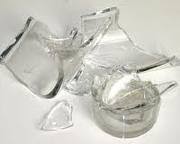
4. Glass pieces appear as silver when seen from a far place.


Monday, 25 April 2011

AMAZING FACTS

                 AMAZING FACTS

In a single drop of water there are 2 sextillion –that’s 2,000,000,000,000,000,000,000 –Oxygen atoms and twice the number of Hydrogen atoms
Hydrogen is the simplest and lightest of all the elements. If it is not attached to other elements, hydrogen on earth floats away into space.

A 30-cm (1ft) cube of osmium weighs 640kg (1,410lb). That’s the same as ten 64 kg adults (140lb)!

 Lithium is soft it can be cut a knife, and is light                Osmium
enough to float on water.


Lithium

If you want to buy some of the element californium? You will need a lottery win as it costs US$27 million for just one gram! Because it have to be artificially created in a nuclear reactor and some it only last for a fraction of a second, hence high price tag.                                                                                                                                           Californium